
Table of Contents
TogglePaint Protection Film in Round Rock, TX
Atomic Auto Spa‘s a STEK USA certified paint protection film installer in Round Rock. We install DYNOshield, DYNOmatte, DYNOblack, and DYNOprism on Tesla, BMW, Porsche, Audi, Mercedes, Lexus, Cybertruck, and exotic vehicles. PPF prevents stone chips, road rash, and minor scratches from reaching the paint.
Send us A Message
What Paint Protection Film Actually Does
Paint protection film’s a clear urethane layer we apply directly to the painted surfaces of a vehicle. When a stone, gravel chip, bug strike, or minor scratch hits the surface, the film absorbs the impact, and the paint underneath stays untouched. The film’s thick enough to handle real-world debris but thin enough to be visually invisible after installation.
The film also includes a self-healing top layer on premium products like STEK DYNOshield. Light surface scratches from car wash brushes, fingernails at the door handle, or minor parking lot contact disappear when warmed by sunlight or warm water. This property addresses the swirl marks and micro-scratching that build up over years of ownership.
For Texas-specific conditions, PPF handles the dominant damage patterns we see across the Austin metro. Highway stone chips from I-35, MoPac, and 290 commute routes. Hill Country gravel debris from county road sections. Limestone dust that etches clear coat if it’s left untouched. Cedar pollen accumulation that traps abrasive particles during the wash cycle. Our exterior detailing services address surface decontamination before PPF is applied, and PPF intercepts everything else before it reaches the paint.
Why We Install STEK USA
We install STEK paint protection film as our primary product across all PPF jobs. Here’s why.
STEK USA’s the engineering name behind the DYNOseries product line. The film carries a 10-year manufacturer warranty against yellowing, cracking, peeling, and adhesive failure. The clarity stays optically clear over years of UV exposure, which is critical in Texas, where the summer sun’s unrelenting. The self-healing top coat reliably recovers from light contact.
The product range covers every paint finish and ownership scenario. Our full STEK installation program covers DYNOshield (gloss, the standard choice for most vehicles), DYNOmatte (for satin and matte factory finishes), DYNOblack (stealth dark applications), and DYNOprism (color-shift film for custom builds). Different paint finishes need different films to preserve the visual character of the original surface.
Brand consistency matters for warranty support. Single-brand installation means a single warranty claim path, a single product specification database, and a single training program that our technicians are certified in. Multi-brand shops divide attention across competing product lines and the depth of expertise on any one brand suffers.
Coverage Scope Decision
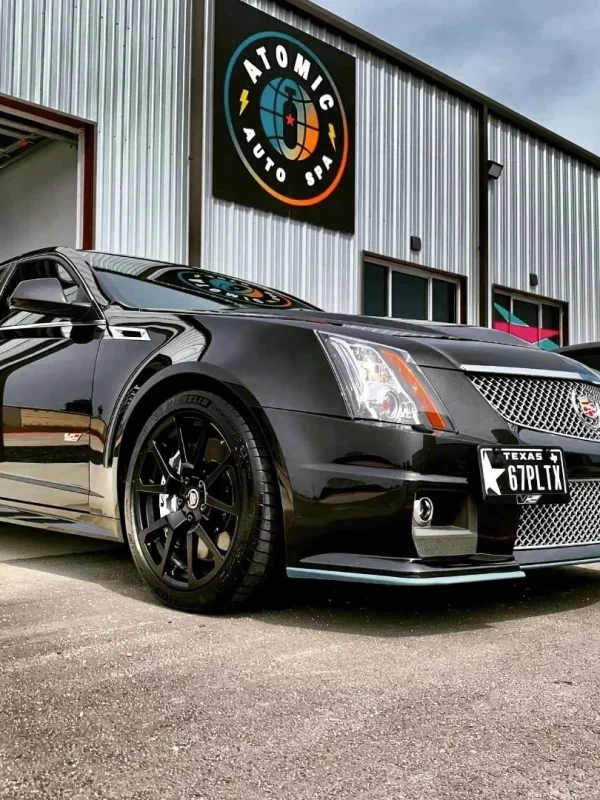
Most PPF conversations start with the same question: how much of the vehicle needs to be covered. The answer depends on the vehicle, the driving pattern, and the ownership horizon.
Partial front coverage is the entry-level option. This typically includes the leading edge of the hood (the first 18 to 24 inches), the front bumper, and sometimes mirror caps. It’s the most affordable scope and addresses the most common stone chip locations. The visible edge line’s something we’ll discuss before installation.
Full front coverage is the most popular scope for daily-driven vehicles. This includes the full hood, full front bumper, front fenders, mirror caps, and headlights. Optionally, we’ll add rocker panels and A-pillars. The film coverage extends to a natural panel break, eliminating the edge line concern.
Full vehicle coverage is the right answer for high-value vehicles, long ownership horizons, and any vehicle the owner wants to keep in showroom condition. The film covers every painted surface including roof, doors, trunk, rear bumper, and lower body. This is what we do for our exotic car protection clients and for most Tesla customers who plan to keep their vehicles for five-plus years.
Track-focused coverage is a separate conversation. Track use produces stone-chip patterns on surfaces that don’t see damage during street driving (rocker panels, lower aero, splitter edges). Customers running Porsche or BMW M cars at COTA track days typically run full vehicle plus track-specific reinforcement at high-impact locations.
Vehicle-Specific PPF Programs
Different vehicle brands have different paint systems, body lines, and use patterns. We maintain dedicated PPF programs for the brands we see most frequently.
Tesla protection coverage covers the Model S, Model 3, Model Y, and the unique stainless-steel panel work on the Cybertruck. Tesla paint’s notoriously thin and soft, which makes PPF particularly valuable on these vehicles. Our Cybertruck PPF program follows a different protocol entirely due to its stainless-steel exterior.
Our BMW paint protection program handles the German paint system, including the Frozen series matte finishes that require DYNOmatte specifically. The Mercedes PPF program covers AMG performance variants and the longer-wheelbase S-Class and SUV models, which have a unique panel coverage scope.
Our Porsche PPF program handles the GT3, GT4, 911 Turbo, Taycan, and the track-day usage patterns common to Porsche ownership in Austin. Our Audi paint protection service covers the RS performance models, the e-tron EV lineup, and the PPG-supplied paint system that has its own characteristics.
For Lexus PPF service, we address the long ownership horizon common to Lexus customers, where the ROI on PPF investment’s particularly clear.
Pairing PPF with Ceramic Coating
PPF protects against impact damage. Ceramic coating protects against chemical damage, UV degradation, and contamination. The two products solve different problems, and the right answer for most premium vehicles is both.
When we pair PPF with ceramic, the ceramic goes over the film after the PPF’s cured. The coating protects the film surface from UV degradation and contamination, makes maintenance significantly easier, and extends film life by reducing chemical and environmental stress on the film.
Our GYEON Quartz ceramic coating is the standard pairing product. GYEON’s a professional-only product available only through certified installers. Our ceramic coating package options detail the different coating tiers and which pairing scenarios each package covers.
Many customers also add ceramic window tint to the same visit. The film, coating, and tint can be sequenced into a single multi-day appointment.
What the Installation Process Looks Like
PPF installation’s a precision job. The work’s done in a clean room environment, with the vehicle decontaminated and surface-prepped before any film touches the paint.
Step one’s a paint inspection. We use a digital paint depth gauge to measure clear coat thickness on each panel. This identifies any prior body work, panels with thin clear coat that need correction work first, and any damage that needs addressing before film goes on.
Step two’s paint correction if needed. Most pre-owned vehicles have swirl marks, light scratches, or oxidation that need to be polished out before the film’s applied. PPF magnifies anything underneath it, so the surface needs to be in correct condition first.
Step three’s the film cutting and application. We use computer-cut patterns specific to each vehicle. The film’s applied wet, we tuck the edges, and it cures for several hours before the vehicle leaves the shop. For full vehicle coverage on a sedan or SUV, the full process typically takes three to four days.
Serving Round Rock and Greater Austin
Our Round Rock shop is at 3401 Sunrise Rd Suite 210. We’re open Monday through Friday, 9:30 AM to 6:00 PM.
We regularly work with PPF customers in Austin and Cedar Park drivers who make the drive north.
We also handle PPF service in Georgetown and welcome Pflugerville customers into our regular schedule.
Call (512) 888-9310 or book a PPF consultation to discuss your vehicle.
PPF FAQs
What's paint protection film made of?
Paint protection film’s a thermoplastic urethane layer with an acrylic adhesive and a self-healing top coat. The total thickness’s approximately 8 mils (0.008 inch) on premium products like STEK DYNOshield. The film’s clear and visually invisible after installation. The self-healing layer recovers from light surface scratches when exposed to heat from sunlight or warm water.
Why do you install STEK and not XPEL, SunTek, or 3M?
We chose STEK USA as our primary brand for product range, warranty terms, optical clarity over time, and self-healing performance. STEK carries a 10-year manufacturer warranty against yellowing, cracking, peeling, and adhesive failure. The DYNO product line covers every paint-finish scenario, including matte and satin. Single-brand installation keeps our technicians focused on a single product specification and a single warranty claim path, improving long-term service quality for our customers.
How long does PPF installation take?
A partial front package on a sedan or SUV typically takes a day. Full front coverage takes one to two days depending on the vehicle. Full vehicle coverage takes three to four days for a sedan or SUV, and four to five days for larger SUVs, trucks, or vehicles with complex aero packages. We provide a specific timeline after reviewing the vehicle in person at consultation.
Does PPF affect the look of the paint?
When we install PPF properly, PPF’s visually invisible on standard gloss paint. The edges are tucked under panel breaks where possible. For matte and satin factory finishes (like BMW Frozen colors or Audi Nardo Gray), we install STEK DYNOmatte specifically to preserve the matte texture. Installing standard gloss PPF on a matte finish would add a gloss layer and change the appearance, which is why product selection matters.
How long does PPF last?
STEK DYNOshield carries a 10-year manufacturer warranty against yellowing, cracking, peeling, and adhesive failure. Real-world lifespan typically meets or exceeds the warranty period when the film’s properly maintained. Vehicles parked outdoors in full Texas sun see more aggressive UV exposure than garaged vehicles, but properly installed premium film holds up well in either condition.
Can I have ceramic coating first, then PPF?
No. Ceramic coating creates a hydrophobic surface that prevents PPF adhesive from bonding properly. If ceramic coating’s already on the vehicle, we need to remove it via paint correction before applying film. That’s why we typically recommend installing PPF first, then applying a ceramic coating over the film once it has cured.
What happens if PPF gets damaged?
Light scratches typically self-heal on premium products with the self-healing top coat. More serious damage that penetrates the film can be repaired by removing and replacing the affected panel section. The warranty covers manufacturing defects but not impact damage that requires panel replacement. Replacing a single damaged panel’s far less expensive than repainting that panel.
Do you cover headlights, side mirrors, and door handle cups?
Yes, all of these are included in standard full front coverage. Headlights are particularly important to protect because they take significant stone-chip exposure, and replacement costs on luxury vehicles are high. Side mirrors and door handle cups get included in full front packages and definitely in full vehicle coverage.
Can I wash my car normally after PPF installation?
Yes. After a 7- to 14-day cure period. We provide specific care instructions at pickup. PPF can be hand washed using normal car shampoos and the two-bucket method we use in our maintenance car wash program. Automatic car washes aren’t recommended because the brushes can damage film edges over time. Pressure washers shouldn’t run at high PSI and should be angled away from edges.
How do I book a PPF consultation?
Call (512) 888-9310 or book online at our consultation page. We typically schedule consultations within seven days during normal periods. The consultation covers paint depth assessment, discussion of coverage scope, timeline review, and a specific quote for the vehicle.