
Table of Contents
TogglePaint Correction in Round Rock, TX
Paint correction removes swirl marks, fine scratches, water spots, and oxidation from your vehicle’s clear coat using machine polishers. We measure paint depth before every job at our Round Rock facility to ensure we work within safe limits.
Your car’s paint takes a beating every day. Swirl marks from improper washing, fine scratches from brushes at the gas station, oxidation from years of Texas sun. They all add up. At Atomic Auto Spa, we correct paint defects in Round Rock and restore your paint to the kind of clarity it had when it rolled off the lot. Before you invest in a ceramic coating installation or PPF installation, paint correction is the step that makes everything else work the way it should.
Call us at (512) 888-9310 or book your appointment to schedule a free paint assessment.
Send us A Message
What Is Paint Correction?
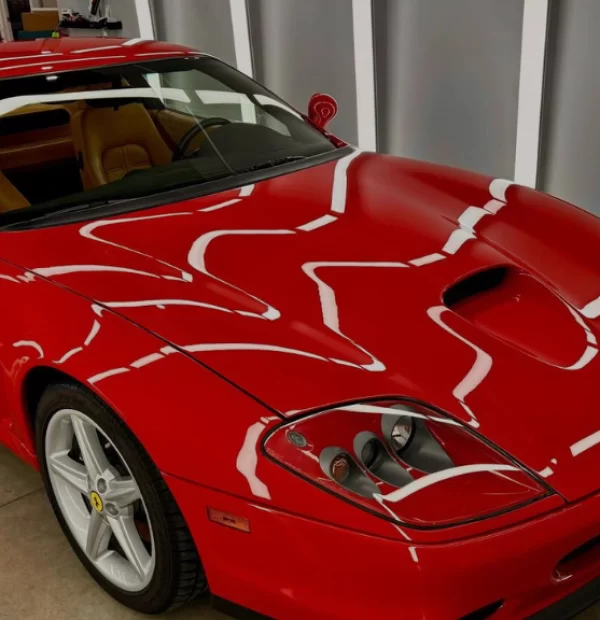
Paint correction is the process of removing defects from your vehicle’s clear coat using machine polishers and carefully selected compounds and polishes. It’s not a quick wipe-down or a spray detailer. It’s a controlled, systematic process that cuts into the clear coat just enough to level the surface and eliminate imperfections beneath.
When light hits a scratched or swirled surface, it scatters in multiple directions. That’s what creates the dull, hazy appearance. After paint correction, the surface is uniform again, so light reflects evenly and produces that deep, mirror-like finish you’re after.
It’s worth knowing that paint correction is a permanent improvement. We’re not hiding anything or filling scratches with wax. We’re actually removing the defects from the clear coat itself.
What We Fix with Paint Correction
Most paint defects we see fall into a few common categories:
Swirl Marks
Swirls are the most common paint defect and the most misunderstood. They’re caused by circular washing motions, dirty wash mitts, automatic car washes with brushes, and wiping dust off with a dry cloth. Under direct sunlight or a flashlight, they appear as a web of fine, circular scratches. A single-stage paint correction removes most swirl marks without aggressive cutting.
Fine Scratches
Named after the hardness scale used to measure minerals, Mohs hardness is used to measure scratch resistance. The formula creates one of the hardest surfaces available in professional ceramic coatings, translating into better resistance to fine scratches and swirl marks from routine washing. It’s a good fit for darker paint colors where surface imperfections show clearly. Durability runs two to three years.
Oxidation
Texas’s sun is relentless. Prolonged UV exposure breaks down the clear coat, leaving the paint looking chalky, faded, and lifeless. Oxidation is especially common on older vehicles, such as cars that have spent years parked outside. Our multi-stage paint correction process cuts through the oxidized layer, bringing fresh, clear paint to the surface.
Water Spots and Mineral Deposits
Hard water leaves mineral deposits on paint that bond to the surface if left untreated. In Round Rock, where water hardness runs high, this is a frequent issue. These spots etch into the clear coat over time and require compounding to remove fully.
Holograms
Holograms are circular machine marks left behind by improper machine polishing. They’re usually only visible under direct lighting, but they’re a sign of a rushed or inexperienced job. We correct hologramming with a proper finishing polish on a clean pad.
Our Paint Correction Process
We don’t rush paint correction. Every vehicle goes through a structured process before a single machine touches the paint.
Step 1: Wash and Decontamination
We start with a thorough hand wash using deionized water filtered to 10 PPM, followed by an iron fallout treatment and clay-bar decontamination. Paint correction on contaminated paint produces uneven results, so this step is non-negotiable.
Step 2: Paint Thickness Measurement
We use a paint depth gauge to measure clear coat thickness across every panel. This tells us how much correction is safe and helps us choose the right cut level for each area. Panels with a thin clear coat get a lighter approach. This protects your paint from over-correction.
Step 3: Single or Multi-Stage Correction
Depending on the severity of the defects, we perform either a single-stage or multi-stage correction. Single-stage works well for light swirls and minor defects. Multi-stage involves a more aggressive compound pass followed by a refining polish to remove any machine marks from the first stage.
Step 4: Panel Wipe-Down
After polishing, we wipe down each panel with a panel prep solution to remove any polish residue. This gives us a clean view of the results and prepares the surface for any protective coating that follows.
Step 5: Inspection Under Lighting
We inspect every panel under high-intensity lighting to catch any remaining defects before the vehicle leaves the shop. If something isn’t right, we go back over it. We don’t sign off on work we’re not satisfied with.
Step 6: Protection Application
Paint correction without protection is a short-term fix. We recommend following every paint correction with a GYEON Quartz installer or STEK PPF installation to lock in the results. A freshly corrected surface bonds to coatings more effectively than contaminated or defect-ridden paint.
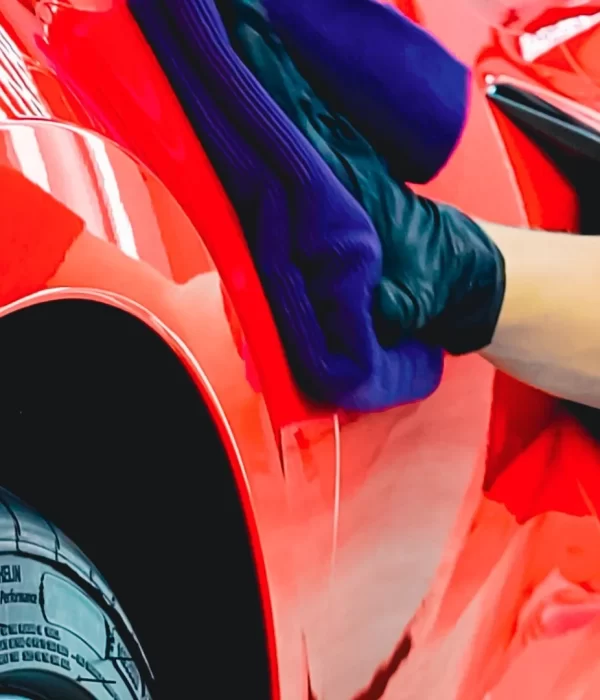
Single-Stage vs. Multi-Stage Paint Correction
We assess every vehicle individually, but here’s a general guide to help you understand the difference:
Single-Stage Correction
Best for vehicles with light swirl marks, minor water spots, and moderate oxidation. We use a medium-grade compound or polish with a rotary or dual-action machine. One pass is usually enough to restore clarity without removing more clear coat than necessary.
Multi-Stage Correction
Best for vehicles with heavy swirls, deep scratches within the clear coat, significant oxidation, or holograms from a previous bad polish job. Stage one uses a cutting compound to remove defects aggressively. Stage two uses a fine polish to refine the surface and eliminate any machine marks from stage one. Multi-stage correction takes longer but delivers a more thorough result.
Why Paint Correction Matters Before Coating or PPF
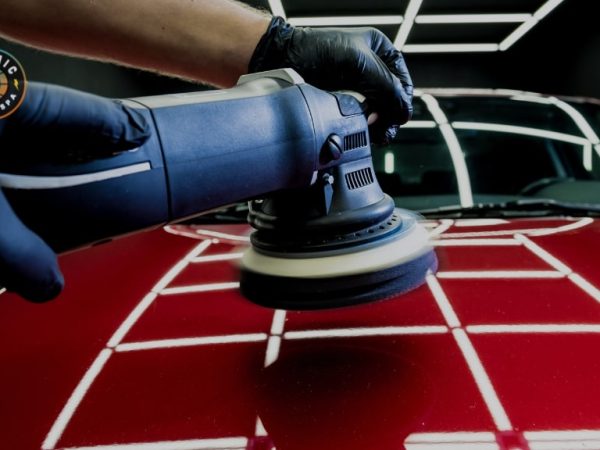
Ceramic coatings and PPF don’t hide paint defects. They lock them in permanently. A coating applied over swirled or scratched paint will produce a glossy surface, with the underlying defects preserved. Once the coating cures, those defects can’t be removed without first stripping the coating.
If you’re planning to protect your paint with a coating or film, paint correction beforehand isn’t optional. It’s the only way to ensure the final result looks the way it should. Our team always inspects the paint before any coating or paint protection film installation and will recommend correction if the paint needs it.
Paint Correction for Texas Conditions
Round Rock’s climate creates a specific set of paint challenges. Triple-digit summer temperatures accelerate clear coat breakdown and cause paint to expand and contract repeatedly. Cedar pollen season coats vehicles in a film of fine particulate that scratches paint when wiped off dry. Construction debris from I-35 and the ongoing growth around Hutto and Taylor regularly leave rock chips and scratches on vehicles.
We work on vehicles from across the area, including Cedar Park, Georgetown, Leander, and Pflugerville. Our climate-controlled indoor facility means your paint is corrected in a controlled environment, not under the sun, where heat affects polish behavior and drying times.
What to Expect After Paint Correction
Results depend on the severity of the defects and the condition of your clear coat going in. Most vehicles see 70 to 95 percent defect removal. Scratches that have broken through the clear coat entirely can’t be polished out. Those require touch-up paint or panel respray. We’ll tell you upfront what’s achievable before we start any work.
After correction, the paint will feel smooth to the touch and reflect light evenly. The difference is most visible under direct sunlight or a flashlight. Colors deepen noticeably, especially on darker vehicles where swirl marks are most prominent.
We also offer ongoing exterior detailing service and a maintenance wash service program to keep your paint in shape after correction. Proper washing technique after correction is what prevents swirls from returning.
Serving Round Rock and Central Texas
Atomic Auto Spa is located at 3401 Sunrise Rd, Suite 210, Round Rock, TX 78665. Open Monday through Friday, 9:30 AM to 6:00 PM.
We serve customers from Austin and Pflugerville as well as Cedar Park, Georgetown, Leander, and beyond.
Call (512) 888-9310 or visit our detailing packages page to learn more about our services before booking.
Paint Correction FAQs
How long does paint correction take?
Single-stage correction typically takes four to six hours, depending on vehicle size. Multi-stage correction can take eight to twelve hours or more. We don’t rush the process. Every panel gets the time it needs.
Will paint correction remove all scratches?
Paint correction removes scratches and defects within the clear coat. If a scratch has broken through the clear coat and into the base coat or primer, polishing won’t fix it. We assess every vehicle before quoting to give you an accurate picture of what’s achievable.
How much clear coat do I have left after correction?
We measure paint thickness before starting and work within safe limits. A single-stage correction removes a very small amount of clear coat, typically less than a micron. We’ll let you know if your clear coat is too thin for safe correction.
Should I get paint correction before or after PPF?
Before. PPF locks in whatever condition the paint is in at installation. If defects are present when the film goes on, they’ll be permanently visible under the film. Correction first, protection second.
How do I prevent swirl marks after paint correction?
Use a clean, soft microfiber wash mitt with the two-bucket method. Rinse the mitt frequently. Never wipe dust off with a dry cloth. Follow our interior auto detailing and wash recommendations to keep your paint looking its best.
Is paint correction worth it on an older car?
It depends on the condition of the clear coat. If the clear coat is still intact and the paint has good thickness, correction can dramatically improve the appearance. We’ll give you an honest assessment before you commit.
What's the difference between paint polishing and paint correction?
Paint polishing typically refers to a single light polish pass to enhance gloss and remove light defects. Paint correction is more aggressive and systematically designed to remove deeper defects across the entire vehicle. Polishing is often included as the final stage of a correction.
Can paint correction fix faded paint?
Oxidation and surface fading caused by UV exposure can be dramatically improved with multi-stage correction. If the clear coat has completely failed and the base coat is exposed, correction won’t help; it requires a respray.
Do you offer paint correction for luxury and exotic vehicles?
Yes. We regularly work on Porsche, BMW, Mercedes, Ferrari, Lamborghini, and other high-end vehicles. Our indoor, climate-controlled facility and paint-thickness gauging process make it a safe environment for vehicles, where paint is expensive and hard to replace.
What should I do to prepare my car for paint correction?
Just bring it in. We handle the full wash-and-decontamination process as part of every correction service. Don’t apply any wax or sealant before bringing the vehicle in, which has to be removed before we can start anyway.